
The Australian job market is dynamic, evolving at a rapid pace fueled by technological advancements, shifting global economics, and a renewed focus on human-centric workplaces. While technical prowess and qualifications remain crucial, employers down under are increasingly prioritizing a different kind of asset: soft skills. As we approach 2026, these intangible, interpersonal attributes are not just desirable – they are essential for success in virtually every industry.
Gone are the days when a stellar academic record alone guaranteed a smooth career path. Today’s Australian workforce demands individuals who can adapt, collaborate, communicate effectively, and lead with empathy. This shift reflects a global trend, but with distinct nuances shaped by Australia’s unique economic landscape and workplace culture. Understanding and cultivating these soft skills now will give job seekers a significant competitive edge.
Why Soft Skills are Non-Negotiable in the Modern Australian Workplace
The push for soft skills isn’t just a buzzword; it’s a strategic response to automation and the complexities of modern business. Research consistently demonstrates that while AI and machine learning can handle routine, data-intensive tasks, they cannot replicate nuanced human interaction, creativity, or emotional intelligence. A 2023 report by LinkedIn highlighted that communication, problem-solving, and collaboration were among the most in-demand soft skills globally, a sentiment echoed across Australian industry bodies.
The Australian economy, with its strong service sector and growing innovation hubs, particularly values individuals who can navigate complex client relationships, foster team cohesion, and drive innovative solutions. This means that whether you’re aiming for a role in tech startups in Melbourne, a financial institution in Sydney, or healthcare in regional Queensland, your ability to apply these human-centric skills will define your impact. For students and recent graduates looking to make their mark, honing these abilities is just as critical as mastering their chosen field. Often, translating academic knowledge into practical, workplace-ready solutions requires developing strong research and writing skills – areas where resources offering assignment writing services can prove invaluable for refining complex assignments and understanding nuanced industry demands, preparing you for the rigorous demands of professional communication.
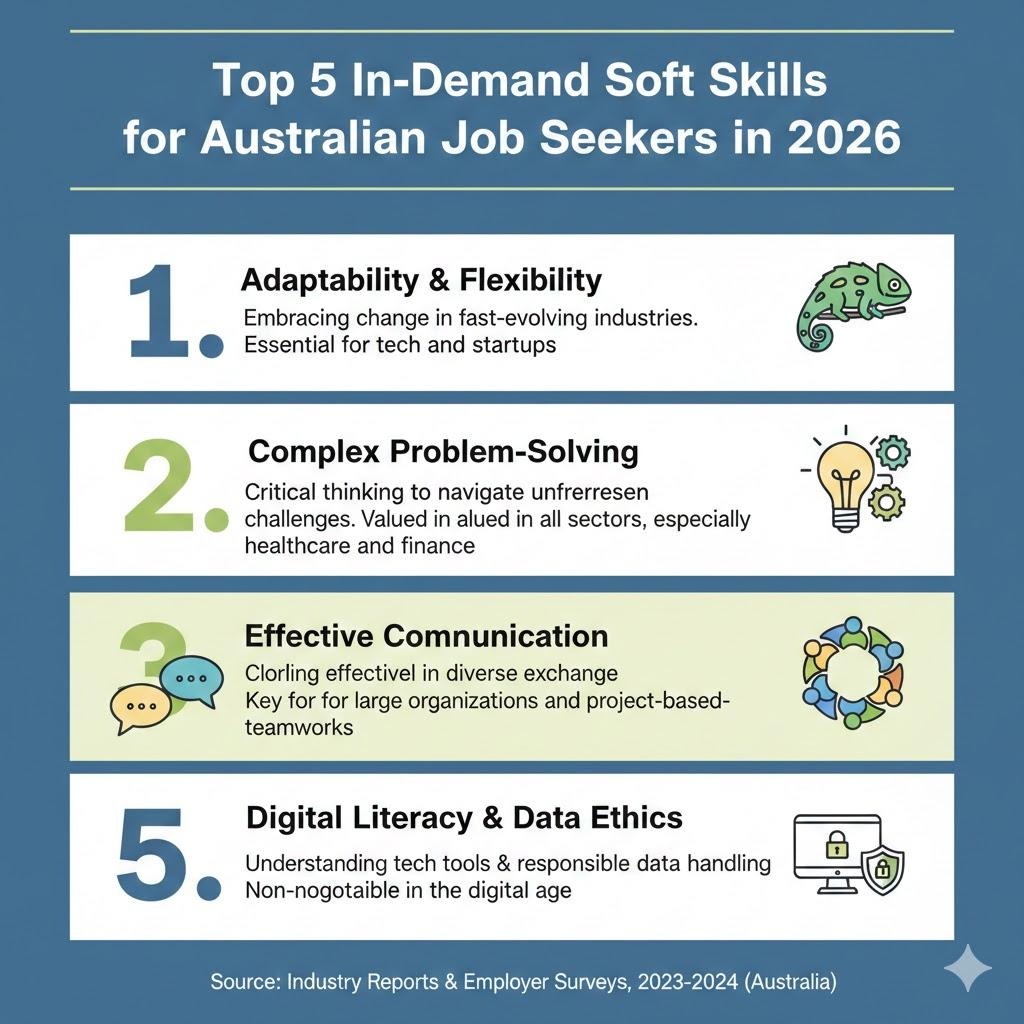
The Essential Soft Skills for Australian Employers in 2026
Let’s delve into the specific soft skills that are making the biggest impact across the Australian professional landscape:
1. Adaptability and Flexibility
The world is constantly changing, and Australia is no exception. Industries are being reshaped by new technologies, market demands, and global events. Employers need individuals who can not only cope with change but thrive in uncertain environments. This means being open to new ideas, learning new processes quickly, and being comfortable with ambiguity.
- Why it matters: Australian businesses, from agriculture to finance, are embracing digital transformation. Being adaptable ensures employees can pivot strategies, learn new software, and contribute effectively even when the goalposts shift.
- Example: A marketing professional quickly mastering a new AI-driven analytics platform or a healthcare worker adapting to updated telehealth protocols.
2. Complex Problem-Solving & Critical Thinking
Australian employers are not looking for order-takers; they are seeking strategic thinkers who can analyze complex situations, identify root causes, and propose innovative solutions. This goes beyond simple troubleshooting and extends to anticipating challenges and developing proactive strategies.
- Why it matters: From environmental challenges facing mining companies to intricate regulatory issues in banking, Australia’s key sectors require deep analytical capabilities.
- Example: A business analyst identifying inefficiencies in a supply chain and proposing a tech-based solution or an engineer designing sustainable infrastructure.
3. Effective Communication (Verbal & Written)
In a diverse and multicultural nation like Australia, clear and concise communication is paramount. This includes active listening, articulate verbal expression, and professional, error-free written communication. Employers want individuals who can convey ideas persuasively, resolve conflicts diplomatically, and collaborate seamlessly with colleagues and clients from varied backgrounds.
- Why it matters: Whether it’s drafting a legal brief, presenting a pitch to investors, or explaining complex medical information to a patient, clear communication underpins success in every Australian profession.
- Example: A project manager clearly outlining objectives to a remote team or a consultant delivering a compelling report to a client.
4. Collaboration & Teamwork
Australian workplace culture strongly emphasizes teamwork. The ability to work constructively within a team, share knowledge, offer support, and contribute to collective goals is highly valued. This includes navigating team dynamics, offering constructive feedback, and pulling your weight to achieve shared success.
- Why it matters: Many Australian industries, from construction to education, rely on cross-functional teams to deliver projects. Effective collaboration boosts productivity and innovation.
- Example: Software developers working together on a coding sprint or a healthcare team coordinating patient care.
5. Digital Literacy & Data Ethics
While often considered a “hard skill,” the ethical and strategic application of digital tools falls squarely into the soft skill category. Australian employers need workers who are not just familiar with technology but understand how to leverage it responsibly, protect data privacy, and maintain cybersecurity best practices.
- Why it matters: With increased data breaches and stricter privacy regulations (like the Australian Privacy Principles), businesses need employees who can use digital tools intelligently and ethically.
- Example: A sales professional using CRM software effectively while adhering to data privacy policies or a marketing specialist analyzing customer data ethically.
6. Emotional Intelligence (EQ)
The capacity to understand and manage one’s own emotions, and to perceive and influence the emotions of others, is becoming critically important. High EQ contributes to better leadership, conflict resolution, and overall workplace harmony.
- Why it matters: In client-facing roles, management positions, or any team environment, empathy and self-awareness can significantly improve outcomes and build stronger relationships.
- Example: A manager mediating a team conflict or a customer service representative de-escalating a tense situation.
7. Initiative & Proactiveness
Australian employers appreciate individuals who take ownership of their work, identify opportunities for improvement, and take action without constant supervision. This shows a commitment to the role and the company’s success.
- Why it matters: In fast-paced environments, proactive employees drive innovation and reduce the burden on management.
- Example: An employee suggesting a new process to streamline workflows or taking the lead on an unassigned task.
How to Cultivate and Demonstrate These Skills
Developing these soft skills isn’t an overnight process; it requires conscious effort and practice.
- Seek Feedback: Regularly ask managers and peers for feedback on your interpersonal skills.
- Volunteer for Projects: Take on roles that challenge your communication, leadership, or problem-solving abilities.
- Continuous Learning: Enroll in workshops, online courses, or read books on topics like emotional intelligence or negotiation.
- Reflect on Experiences: After every project or interaction, consider what went well and what could be improved in terms of your soft skills.
- Practice Active Listening: Engage fully when others speak, ask clarifying questions, and paraphrase to ensure understanding.
When it comes to demonstrating these skills in job applications and interviews, don’t just state them; show them. Use the STAR method (Situation, Task, Action, Result) to provide concrete examples of how you’ve applied these soft skills to achieve positive outcomes in past roles, academic projects, or volunteer work.
Conclusion
The Australian job market in 2026 will undoubtedly continue its trajectory towards valuing well-rounded individuals. While technical skills open doors, it’s the mastery of soft skills that truly allows professionals to excel, lead, and adapt in an ever-changing landscape. By proactively cultivating and showcasing adaptability, problem-solving, communication, collaboration, digital literacy, emotional intelligence, and initiative, Australian job seekers can position themselves for enduring career success.
Key Takeaways
- Soft skills are critical: Beyond technical qualifications, Australian employers in 2026 highly value interpersonal and cognitive soft skills.
- Automation demands human skills: As AI handles routine tasks, human attributes like creativity, empathy, and critical thinking become more valuable.
- Top skills include: Adaptability, complex problem-solving, effective communication, collaboration, digital literacy, emotional intelligence, and initiative.
- Cultivation is key: Actively seek feedback, volunteer for challenging roles, and practice continuous learning to develop these skills.
- Demonstrate, don’t just state: Use real-world examples (e.g., STAR method) to showcase your soft skills in applications and interviews.
Frequently Asked Questions (FAQs)
Q1: What’s the difference between soft skills and hard skills?
Hard skills are teachable abilities or techniques that are easily quantifiable (e.g., coding, accounting, language proficiency). Soft skills are subjective, non-technical skills that relate to how you work and interact with others (e.g., communication, leadership, problem-solving).
Q2: Are soft skills more important than hard skills?
Neither is “more” important; they are complementary. Hard skills get your foot in the door, but soft skills help you succeed, advance, and adapt in any role. Australian employers are increasingly seeing soft skills as the differentiator.
Q3: How can I prove I have strong soft skills during an interview?
Instead of just saying “I’m a good communicator,” provide specific examples. Use the STAR method to describe a Situation, the Task you faced, the Action you took (highlighting your soft skill), and the positive Result achieved.
Q4: Can soft skills be learned or are they innate?
Soft skills can absolutely be learned and developed through practice, feedback, and conscious effort. They are not fixed personality traits but rather behaviors and mindsets that can be honed over time.
Q5: What if my industry is very technical, like IT or engineering? Do soft skills still matter as much?
Yes, arguably even more so. In technical fields, strong soft skills like collaboration, problem-solving, and clear communication are essential for explaining complex ideas, working effectively in agile teams, and managing projects successfully.
For more articles; visit our our website: Cnlawblog.blog